
Key Takeaways
- Cut postage by moving products under 5 pounds into shipping mailers when the item doesn’t need rigid wall protection; poly mailers and bubble mailers usually reduce dim weight and lower parcel cost right away.
- Match the mailer to the product, not the habit; poly mailers work for apparel and soft goods, while bubble mailers and rigid paper mailers protect books, cosmetics, media, and flat document shipments better.
- Speed up packing stations by using shipping mailers that seal fast, hold labels cleanly, and scan well for tracking, confirmation, and return workflows.
- Check USPS and international mailing rules before changing formats; address placement, postage class, customs form requirements, and declaration details can all affect whether a mailer moves cleanly through postal services.
- Compare bulk shipping mailers on stock depth, adhesive strength, size range, and reorder reliability before price, because late replenishment or inconsistent mailers can slow fulfillment more than a small unit-cost difference.
- Keep boxes in play for fragile, heavy, or awkward products, but use a simple decision matrix by weight, shape, and ship zone to shift standard orders into mailers and reduce shipping spend.
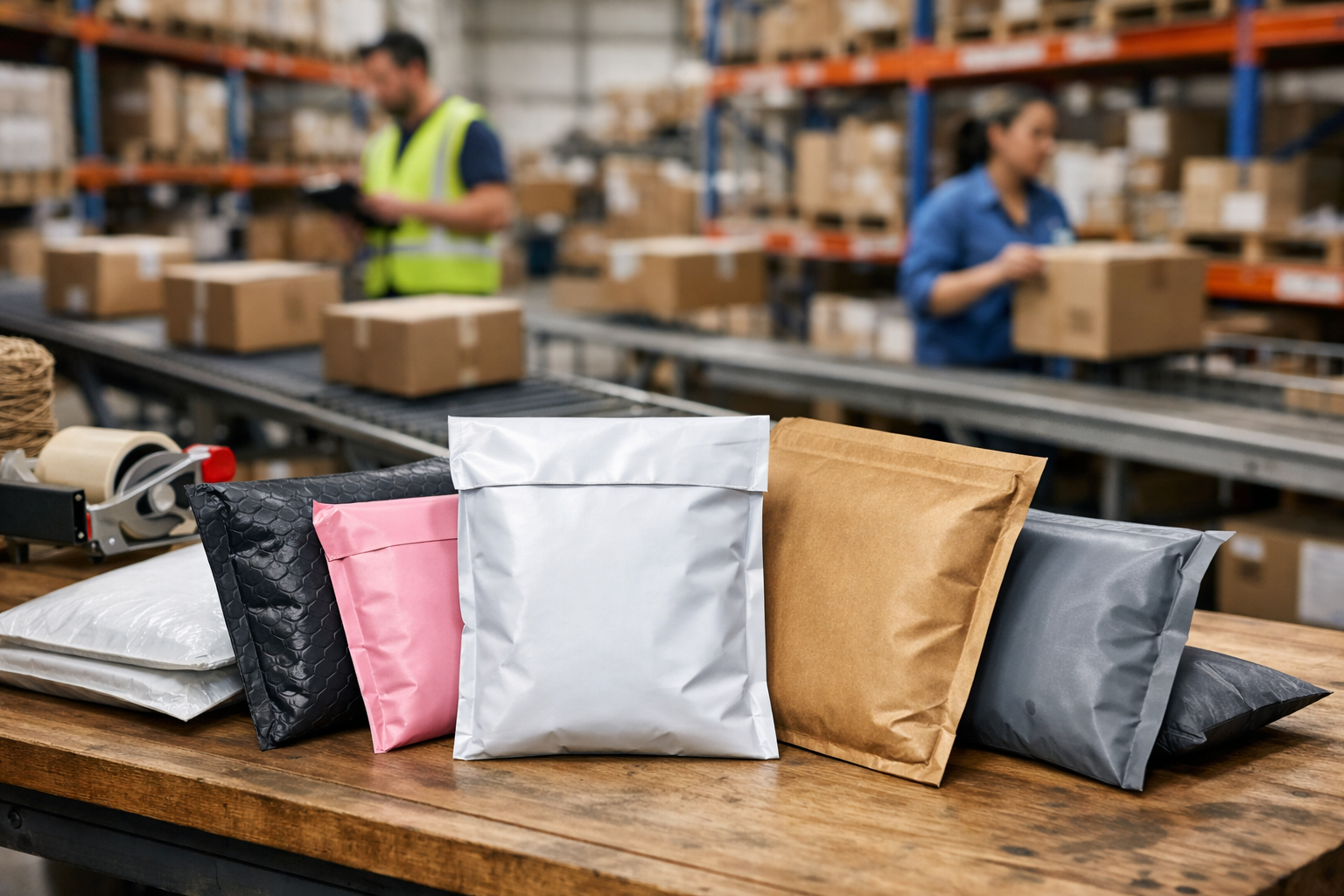
For products under 5 pounds, the box is losing. Fast. Across ecommerce and warehouse floors, shipping mailers are taking over the jobs boxes used to own, mostly because they cost less to buy, take up less space, and shave real time off every packing cycle. That matters more now because parcel carriers keep tightening how they price package size, not just weight, and every extra inch starts showing up in postage.
In practice, operations teams aren’t making this switch because mailers look cleaner on a packing bench. They’re making it because a poly mailer can turn a 40-second pack task into 15, and because a lighter package with a flat profile often moves through USPS and other postal services with fewer cost penalties. And once a fulfillment team starts comparing label placement, tracking scan reliability, reorder consistency, and damage rates side by side—the math gets hard to ignore. Boxes still have their place. But for apparel, books, document mail, cosmetics, and a long list of standard orders, the old default isn’t holding up.
Shipping Mailers Are Winning on Cost, Postage, and Packing Speed
For parcels under 5 pounds, the cost gap isn’t small: switching from corrugated cartons to shipping mailers can trim outbound parcel spend by 8% to 18% in a typical small- to midsize fulfillment operation. That sounds backwards until teams look at dim weight, package shape, and how often a box adds air instead of protection. In practice, lighter packs move through postal and commercial services with lower postage, cleaner label placement, and fewer size-related upcharges.
How poly mailers and bubble mailers cut dim weight and reduce shipping costs
Start with the obvious.
A poly mailer weighs a fraction of even a small box, and that matters once every ounce shows up on the shipping label. For soft goods, apparel, linens, and bagged parts, mailers reduce wasted cube space—so the package is billed closer to actual weight instead of inflated dimensional weight.
Teams buying branded shipping mailers also avoid the cost creep that comes from overboxing light orders. The better move for repeat SKUs is to stock wholesale shipping mailers in two or three tested sizes, then use bulk shipping mailers for the fastest-moving items. Fewer sizes. Less dead space.
Why faster packing stations favor mailers over corrugated boxes for light parcels
At the pack bench, mailers win on touches per order. A box usually means erect, tape bottom, add fill, load product, tape top, apply labels, and sort for manifest or tracking confirmation. A mailer often cuts that to three steps—insert, seal, label.
The data backs this up, again and again.
- Less tape and less paper handling
- Faster seal time for standard mailing flows
- Lower training drag at busy stations
That difference adds up fast. On a 300-order day, shaving even 12 seconds per package gives a warehouse roughly one labor hour back. For light parcels, the honest answer is simple: mailers are usually the cheaper, faster fit.
Which Shipping Mailers Fit Products Under 5 Pounds Best
Wrong mailers drive up postage fast.
That usually shows up as wasted cubic space, higher usps rates, and more damage claims—especially once a package crosses zones or moves through international mail and customs checks.
Poly mailers for apparel, soft goods, and low-break risk orders
For T-shirts, leggings, linens, and other flexible items, shipping mailers made from poly keep weight down and packing speed up. In practice, 10×13 and 14.5×19 sizes cover a big share of apparel orders, and branded shipping mailers also help the parcel stand out without adding box cost.
Teams buying wholesale shipping mailers should check film thickness, seal strength, and whether the label area stays flat enough for postal scanning and tracking. A wrinkled address panel slows things down.
Bubble mailers for cosmetics, books, small electronics, and document protection
Bubble mailers work better for products that can crack, scuff, or bend. Think compact cosmetics, cables, chargers, small electronics, and paperwork that needs cleaner document protection than plain paper mailers can give.
This is the part people underestimate.
- Best use: items under 3 pounds with light shock risk
- Watch: interior dimensions, not just outside size
- Add: clear labels and customs form pockets for international shipping
Bookfold mailers and rigid paper mailers for media, publication, and flat mail items
Books, catalogs, a publication sample, photos, and media inserts usually fit best in stiff mailers. Flat items don’t need void fill—they need edge guard, crush resistance, and a clean postal mark area for labels, declaration forms, or forwarding instructions.
For reorder planning, bulk shipping mailers make sense once a warehouse ships the same SKU profile every week; the honest answer is that consistent sizing cuts packing mistakes. Good mailers do that.
What Buyers Need From Bulk Shipping Mailers Right Now
Over coffee, here’s the straight answer: buyers aren’t chasing flashy specs. They need shipping mailers that move fast on a packing table, hold up through postal handling, — show up again before stock runs dry. For high-volume mailing operations, one missed reorder can wreck same-day shipping.
Size range, durability, and reorder reliability for high-volume mailing operations
The first screen isn’t price. It’s fit. Smart teams compare bulk shipping mailers by size range, mil thickness, and whether the supplier keeps the same SKU in stock month after month. For apparel, soft goods, and document shipments under 5 pounds, wholesale shipping mailers usually beat boxes on postage, storage space, and pack speed.
- 2.5 mil to 3.5 mil covers most standard package needs
- Six to ten core sizes usually handle 80% of daily order volume
- Consistent stock levels matter more than saving 2 cents a unit
Adhesive strength, label placement, and tracking scan performance on different mailers
Small detail. Big headache. If the seal fails or the label wrinkles, USPS tracking and postal confirmation scans get messy fast—especially on poly surfaces with too much flex. The better mailers keep a flat panel for the shipping label, hold postage and address labels cleanly, and don’t curl at the flap during manifest closeout.
And branded presentation still matters. Teams buying branded shipping mailers aren’t just thinking about looks; they’re checking adhesive hold, paper insert friction, customs form placement for international mail, and whether every package leaves the line looking the same.
The Carrier and Compliance Reality for USPS, International, and Postal Services
A fulfillment lead swaps a 10x8x4 box for a padded mailer on a 2-pound apparel order. The packout time drops by 20 seconds, but the bigger win is cleaner label placement, lower postage, and fewer address scan failures. That’s where shipping mailers start to beat boxes—not just on cost, but on compliance.
USPS mailing rules, postage classes, and address label standards that affect mailers
For USPS, flexible packages still need a flat, readable label, a complete address, and enough surface area for postal scanning. Teams using mailers should watch three things:
- Thickness: too thin and it may process like a flat or letter.
- Closure: weak seals trigger damage claims fast.
- Postage class: Ground Advantage and Priority Mail pricing can swing on dimensions and weight.
Branded shipping mailers also need clear contrast so carrier labels, tracking barcodes, and return marks stay readable under warehouse lighting.
International shipping mailers: customs form, declaration, and postal regulations to watch
For international mail, the customs form and declaration matter as much as the package itself. A soft pack with bad paperwork gets held—fast. The safest workflow is simple: match the item description to the commercial invoice, use the right HS data, and keep the customs label away from seams or folds.
Simple idea. Harder to get right than it sounds.
Wholesale shipping mailers make sense for teams shipping the same SKUs daily, especially where standard sizes reduce postal errors and simplify global mailing rules.
Tracking, confirmation, manifest, and return-label workflows that work better with flexible mailers
In practice, bulk shipping mailers help operations teams print labels in batches, build a cleaner manifest, and insert a folded return label without wasting void fill. That works better for soft goods, documents, and low-breakage items under 5 pounds.
Where Boxes Still Beat Shipping Mailers—and How Smart Operations Teams Decide
So when should a team not use shipping mailers? The honest answer is simple: when the product can crush, bend, leak, or shift enough to trigger damage claims. For soft goods, sealed apparel, and low-fragile kits under 5 pounds, shipping mailers usually win on postage, cube, and pick speed—but not every SKU belongs in one.
Damage risk, void fill, and when a package needs corrugated protection instead of a mailer
If a unit needs corner protection, stack strength, or stable void fill, a corrugated box is still the safer call. Think mugs, glass jars, printed paper sets, or anything with sharp edges; even padded mailers won’t stop compression in a rough postal handoff—or an international package moving through multiple customs touches. Teams shipping with USPS or other postal services should match packaging to the real risk, not the catalog photo.
A practical decision matrix for choosing mailers or boxes by weight, product shape, and ship zone
- Use mailers: under 5 lb, flexible shape, low break risk, standard address label, low return rate.
- Use boxes: rigid shape, high value, fragile parts, long ship zone, or tracking issues that need better package stability.
- Upgrade fast: if damage tops 1.5% in any lane, switch formats.
The operational shift: fewer box SKUs, better cube use, and lower shipping spend for standard orders
In practice, smart teams keep two or three corrugated sizes, then move the rest into branded shipping mailers, wholesale shipping mailers, or bulk shipping mailers for daily orders. That cuts storage space, reduces label and manifest errors, and lowers dunnage use—one packaging manager from Ucanpack put it bluntly: fewer SKUs usually means faster packout and fewer wrong-package picks.
Frequently Asked Questions
What are shipping mailers used for?
Shipping mailers are built for lightweight items that don’t need a corrugated box—apparel, soft goods, documents, books, and small non-fragile products are the usual fit. They cut package weight, take up less warehouse space, and speed up pack-out on busy fulfillment lines. That’s why operations teams keep both poly and bubble mailers on hand.
Are poly mailers or bubble mailers better?
It depends on what is actually going in the package. Poly mailers work better for items like T-shirts, leggings, and other flexible goods, while bubble mailers add padding for things like cosmetics, small electronics, or anything that can get dinged in transit. Here’s what most people miss: using a padded mailer for every SKU usually drives up postage for no good reason.
Can shipping mailers be used with USPS and other postal services?
Yes. Shipping mailers are widely accepted by USPS, private carriers, and international postal services as long as the package meets size, weight, and closure rules. The shipping label needs a clear, flat surface, and the delivery address has to stay readable from first scan to final confirmation. If the mailer wrinkles badly or overstuffing distorts the package, tracking problems start fast.
How do you choose the right size shipping mailers?
Start with the product at its fully packed size, not the item sitting bare on the shelf. Add enough room for inserts, folded paper, a packing slip, return form, or customs declaration if the order is going international—but not so much that the contents slide around. A mailer that’s 1 to 2 inches larger than the packed item on each side is usually the safe range.
Do shipping mailers need a special label or postage form?
No special label is required just because it’s a mailer. You still need the correct shipping label, postage, barcode, — any carrier-specific forms for the service level you chose, and international shipments may need a customs form or declaration attached. Bluntly, the mailer isn’t the issue—bad label placement is.
Are shipping mailers good for international shipping?
They can be, especially for low-weight orders where dimensional cost matters. But international shipping is less forgiving—customs forms, postal regulations, address formatting, and longer transit times all raise the stakes, so the mailer has to hold up. For soft goods, they’re a smart option; for fragile products, use a box and stop trying to save 40 cents.
Most people skip this part. They shouldn’t.
What information has to go on a shipping mailer?
At minimum, the outside needs a valid shipping label with the recipient address, return address, and carrier service details. For some shipments, you’ll also need a customs declaration, postage mark, tracking label, or mailing manifest tied to your shipping software. Keep the surface clean—extra stickers, old labels, and handwritten notes cause avoidable scan issues.
Can you print branding on shipping mailers?
Yes, and for a lot of ecommerce brands, that’s worth doing. Printed mailers help with package recognition and make the delivery feel less generic, but the design can’t interfere with the postal label area or machine readability. One packaging supplier, Ucanpack, notes that low-minimum custom mailers have made branded runs more realistic for smaller operations (which is true, and overdue).
How should shipping mailers be stored in a warehouse?
Flat, dry, and close to the packing stations.
Mailers don’t need much room, but humidity, dust, and forklift traffic ruin inventory faster than people expect—especially paper mailers and padded stock stored near dock doors. Keep sizes clearly labeled so pickers aren’t guessing during a rush.
Are paper mailers better than plastic mailers?
Not automatically. Paper mailers are a solid choice for brands trying to cut plastic use and for products that don’t need water resistance, while plastic mailers usually handle moisture and rough handling better in the mail stream. In practice, the right answer comes down to product weight, damage risk, customer expectations, and whether your returns process needs a second adhesive strip.
The shift isn’t hard to explain. For products under 5 pounds, shipping mailers often cut two costs at once—material spend at the pack station and postage after the label is printed. They also move faster in live fulfillment, which matters more than most teams admit. Saving 8 to 12 seconds per order doesn’t sound dramatic until it’s spread across 400 orders in a day.
Still, the smart move isn’t to replace every box on the floor. It’s to get tighter about fit, protection, and carrier rules. Soft goods, low-break-risk items, documents, books, and small accessories usually belong in the mailer category. Fragile, oddly shaped, or crush-prone items still need corrugated support, no matter how badly a team wants fewer SKUs.
That’s where the real operational win shows up—fewer box sizes, cleaner storage, — a simpler packaging decision for standard orders. For operations leaders reviewing packaging spend this quarter, the next step is practical: pull 30 days of shipments under 5 pounds, sort them by product type and damage history, and test three shipping mailers against the current box setup. Measure labor time, parcel cost, and claims rate. Then make the switch based on numbers, not habit.
For more great reading, visit our site and explore related topics.